You have cleaned up your diet. You have taken antifungal supplements. You have cut out sugar, avoided alcohol, and followed the protocol faithfully. And yet — the symptoms keep coming back. The bloating, the fatigue, the brain fog that no amount of sleep seems to fix.
If this sounds familiar, you may be dealing with something that most conventional Candida protocols were never designed to address: Candida biofilm.
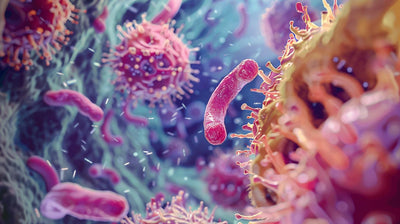
Biofilm is not simply a Candida problem — it is a polymicrobial fortress. Candida, bacteria, archaea, and other microorganisms collaborate to construct a dense, protective matrix that anchors to the gut wall and shields its residents from antifungal agents, immune cells, and even dietary interventions. Once biofilm is established, the symptoms it produces are distinct — more persistent, more diffuse, and more resistant to standard treatment.
Here are seven signs that Candida biofilm may be the hidden driver behind your stubborn symptoms.
Sign #1: Your Symptoms Keep Coming Back — Even After You Feel Better
This is the most telling sign of all. You feel genuinely better after a few weeks on an anti-Candida protocol. Energy improves, bloating subsides, the fog lifts. Then you relax slightly — maybe you eat something off-plan, or finish your supplement course — and within days, the symptoms flood back as if you never started.
This relapse pattern is the biological fingerprint of biofilm. Free-floating Candida cells are relatively easy to eliminate. But the biofilm-protected colonies embedded in the gut wall are not reached by most antifungal protocols. They survive in a near-dormant state, waiting. The moment the pressure is off, they repopulate rapidly — rebuilding their numbers from the protected reservoir that was never touched.
Lasting resolution requires dismantling the biofilm matrix itself, not just eliminating the free-floating cells. Until the fortress is addressed, relapse is not a failure of willpower — it is a failure of strategy.
 Sign #2: Persistent Brain Fog That Does Not Respond to Rest or Diet
Cognitive symptoms are among the most distressing and least understood consequences of Candida overgrowth. The connection is real and biological: Candida produces metabolic byproducts — including acetaldehyde, a neurotoxic compound — that enter the bloodstream and affect brain function directly.
When Candida is protected within a biofilm, this toxic output is continuous and low-grade. The blood-brain barrier becomes chronically burdened. The result is the mental cloudiness, poor concentration, word-finding difficulty, and mood instability that Candida sufferers describe as feeling like they are "thinking through cotton wool."
What makes biofilm-associated brain fog distinctive is its resistance. Rest helps briefly but does not resolve it. Dietary changes reduce it but do not eliminate it. The underlying source — the biofilm colony continuously generating neurotoxic metabolites — remains active regardless of what you do at the surface level.
Sign #3: Bloating and Digestive Distress That Shifts and Moves
Bloating associated with Candida biofilm has a particular quality that distinguishes it from ordinary digestive upset. It tends to be unpredictable — appearing regardless of what you eat, shifting in location, and persisting even on days when your diet is impeccable.
This is because biofilm colonies anchor to the gut wall at multiple sites. The fermentation activity within the biofilm produces gas continuously — not just in response to specific foods. Candida within the biofilm also releases enzymes that disrupt the intestinal lining, increasing permeability and contributing to the inflammation that amplifies digestive symptoms.
If your bloating seems disconnected from your food choices — if it appears even when you are eating cleanly and disappears without obvious reason — biofilm activity along the gut wall is a likely contributor.
Sign #4: Intense and Specific Sugar or Carbohydrate Cravings
Candida is often described as "driving" sugar cravings, and while this sounds metaphorical, there is genuine biology behind it. Candida within a biofilm actively signals the host environment for the glucose it needs to sustain the colony. These signals interact with neurotransmitter pathways in ways that produce real, urgent cravings — particularly for sugar, refined carbohydrates, and alcohol.
What makes biofilm-associated cravings distinctive is their intensity and specificity. These are not general hunger signals. They are targeted — a sudden, almost compulsive pull toward something sweet or starchy, often appearing at predictable times of day and feeling disproportionate to actual caloric need.
Many people are bewildered and ashamed by these cravings, interpreting them as a lack of discipline. They are not. They are a physiological signal from an entrenched microbial community that has learned to influence its host environment in order to survive.

Sign #5: Chronic Fatigue That Is Not Explained by Sleep or Lifestyle
The fatigue associated with Candida biofilm is not ordinary tiredness. It is a deep, cellular exhaustion — the kind that persists through a full night of sleep, that makes physical exertion feel disproportionately difficult, and that does not lift with caffeine or rest.
The mechanisms are multiple. Candida's toxic metabolic byproducts — particularly acetaldehyde — interfere directly with mitochondrial function, impairing the cells' ability to produce energy at the most fundamental level. The chronic low-grade inflammation maintained by biofilm diverts enormous immune resources, leaving the body in a constant state of biological high alert that is profoundly draining. Nutrient absorption is also compromised when the gut lining is chronically inflamed — meaning that even a good diet may not be delivering the cellular fuel your body needs.
This is why Candida-related fatigue so often puzzles conventional medicine. Blood panels look normal. Thyroid markers are unremarkable. Sleep studies show nothing. The source is microbial — embedded in the gut wall — and invisible to standard diagnostic tools.
Sign #6: Skin, Nail, or Vaginal Symptoms That Recur Repeatedly
Candida does not confine itself to the gut. When biofilm is well-established and the gut barrier is compromised, Candida and its toxic byproducts can enter systemic circulation and manifest throughout the body — on the skin, in the nails, and in the vaginal tract.
The hallmark of biofilm-associated surface symptoms is their recurrence. Vaginal yeast infections that return month after month despite treatment. Fungal nail infections that clear partially and then grow back. Skin rashes, oral thrush, or scalp issues that respond to topical treatment temporarily but never fully resolve.
Topical antifungal treatments address only the local expression of the problem — the Candida that has migrated to the surface. As long as the biofilm reservoir in the gut remains intact, it continues to seed systemic Candida, making recurrence at the surface almost inevitable. The root of the problem is inside, not outside.
Sign #7: Your Symptoms Worsen When You Try to Treat Them
This one surprises people — and frightens them. You start an antifungal protocol, and within a few days you feel significantly worse. Headaches, increased fatigue, heightened brain fog, skin flare-ups, flu-like achiness. Many people interpret this as a sign that the treatment is wrong. Often, it is a sign that it is working.
This reaction is known as a Herxheimer response — or die-off. As Candida cells are killed, they release a surge of toxic metabolic byproducts into the bloodstream simultaneously. When the immune system and liver are already burdened, this sudden load produces a temporary but very real worsening of symptoms.
With biofilm, the Herxheimer response can be particularly intense — because as the biofilm matrix begins to break down, it releases not just Candida byproducts but the accumulated metabolic waste of the entire polymicrobial community within. This is a sign that the biofilm disruption is working. But it underscores why biofilm elimination needs to be approached strategically — supporting the liver, moving slowly, and rebuilding the gut microbiome simultaneously.
If You Recognize These Signs, Here Is What Needs to Happen
Recognizing biofilm as the root issue changes everything about how you approach Candida elimination. Standard antifungal protocols — whether dietary or supplemental — are necessary but not sufficient on their own. Effective resolution requires working on three levels simultaneously:
- Disrupting and dissolving the biofilm matrix so that antifungal agents can reach the Candida colonies within
- Eliminating the now-exposed Candida organisms with targeted antifungal support
- Rebuilding the gut microbiome with beneficial organisms that occupy the terrain and prevent Candida from re-establishing
This three-stage logic is the foundation of Body Ecology's approach to Candida — and it is what distinguishes Candida CLR from a standard antifungal supplement.
How Candida CLR Addresses Biofilm
Candida CLR contains two specific enzymes — Cellulase and Protease — that target the physical structure of biofilm directly. Cellulase breaks down the beta-glucan polysaccharide chains that form the backbone of the biofilm matrix. Protease dismantles its protein scaffold. Together, they attack the biofilm on two biochemical fronts — degrading the structure and exposing the Candida colonies within to the formula's antifungal ingredients.
Once the biofilm is disrupted, Oregano Leaf Powder (750mg) and Caprylic Acid (600mg) can reach and eliminate the now-exposed Candida cells. LactoSpore® Bacillus coagulans, Arabinogalactan, and Aloe Vera Leaf Gel then support the rebuilding of a healthy gut environment — so that the terrain itself becomes inhospitable to Candida re-establishment.
This is not just an antifungal. It is a complete biofilm-disruption and gut-rebuilding protocol in a single formula.
If you have been struggling with Candida symptoms that stubbornly resist your best efforts, the answer is very likely not more of the same protocol. It is a protocol that finally addresses what has been protecting Candida all along.
The biofilm. The fortress. And now — a strategy designed to take it down.