

Why this Korean staple is also a wonderfood (plus a kimchi recipe)
Have you heard of kimchi? It’s the Korean fermented dish that’s been called one of the world’s healthiest foods by several publications. If not, then you may be missing out on health benefits, like support for cholesterol, immunity, digestion, and brain health, as well as essential vitamins and minerals and live probiotics.1-3
What is kimchi, and how do you eat it?
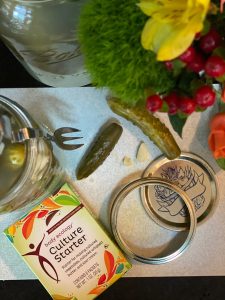
Next time you take a picture, point the camera and have everyone say, “kimchi!” Koreans use the word kimchi when they take pictures the same way Americans say “cheese!” This sour, spicy Korean dish may be one of the healthiest foods in the world. Use our Culture Starter to make your kimchi recipe.
Kimchi has been a staple of Korean cuisine for centuries and is served with every meal. With this delicious and nutritious food on the menu, it’s no wonder that Koreans, who traditionally eat a diet based on vegetables, grains, and fermented foods, are thought to be some of the healthiest people on the planet.
Koreans do eat small amounts of protein, including meat and seafood.
But their consumption of fermented kimchi is what sets their diet apart:
- Traditional kimchi is made from cabbage, garlic, red pepper, and salt.
- Some people like to add other flavors, using scallions or ginger.
- Another option is to include shredded apple for a touch of sweetness.
Regardless of ingredients, the vegetables are chopped into bite-sized pieces or are shredded. They’re then mixed together with seasonings and fermented. (In the olden days, they were buried underground in earthenware pots, where they fermented at a constant 55-degree temperature.)
The result is a nutrient-dense superfood that’s healthier than almost anything else you can possibly eat.
Kimchi for life (and for potential protection against viruses)
Koreans have known for many centuries what other cultures are just now discovering: Fermented foods are the key to a healthy digestive system and immunity.
Multiple studies shed light on kimchi’s role in combating viral infections, proving effective against the flu, and point to kimchi as a possible cancer fighter.3,4 New studies also suggest that kimchi might support recovery and potentially reduce mortality from COVID-19.
Other evidence shows that the fermentation process multiplies the availability of the vitamins, minerals, and all other nutrients in kimchi and indicates that the probiotics in kimchi are crucial to our wellbeing.3,5
Here at Body Ecology, we’re excited about the attention kimchi is getting in the media because it increases awareness about fermented foods and beverages in general.
Body Ecology has always emphasized the importance of a vital inner ecosystem, with plenty of good bacteria (microbes) in your intestines to help boost immunity. Fermented foods and beverages, like kimchi, provide the necessary microbes that work to keep you healthy and strong.
Have you ever wanted to try fermenting vegetables at home? Become a home-fermenting expert.
Kimchi recipe: How to make easy, gut-friendly Korean kimchi
Try this great kimchi recipe to see for yourself how good fermented vegetables can be:
Ingredients:
- 2 heads Napa cabbage (or another Chinese cabbage variety), shredded in a food processor
- 5-10 scallions or spring onions (similar to scallions, only stronger and hotter in flavor), finely chopped
- 2-3 cloves garlic, crushed
- 1 tsp. crushed, fresh ginger or powdered ginger
- 2 jalapeños, minced fine
- 2 tbsp. crushed fresh red chili pepper
- Half an onion (optional)
- Body Ecology Culture Starter
- ½ tsp. Celtic Fine Grind Sea Salt
- 2 tbsp. honey or 1-3 scoops Body Ecology EcoBloom as food for the microbes (see below)
Instructions:
1. Combine all ingredients in a large bowl, except Culture Starter, sea salt, and EcoBloom or honey.
2. Remove several cups of this mixture and put into a blender.
3. Add enough filtered water with the mixture in your blender to make a “brine” the consistency of a thick juice. Add starter, salt, and EcoBloom or honey. Blend well and then add brine back into first mixture. Stir well.
4. Pack mixture down into 1½ quart glass or stainless steel container with an airtight lid. Use your fist, a wooden dowel, or a potato masher to pack veggies tightly.
5. Fill container almost full, but leave about 2 inches of room at the top for veggies to expand.
6. Roll up several cabbage leaves into a tight “log” and place them on top to fill the remaining 2-inch space. Clamp jar closed or screw on airtight lid.
7. Let veggies sit at about a 70-degree room temperature for at least 3 days. A week is even better. Refrigerate to slow down fermentation. Enjoy!
To use Body Ecology’s Culture Starter:
1. Dissolve one or two packages of Culture Starter in 1½ cup warm (90 degree) water. Add some form of sugar to feed the starter (try Rapadura, Sucanat, honey, Agave, or EcoBloom).
2. Let starter/sugar mixture sit for about 20 minutes or longer while the L. plantarum and other bacteria begin to wake up. Add this starter culture to the brine (step 3 in the instructions, above).
A note about sugar, salt, and spice:
- Are you wondering why honey or some type of sweetener would be used in this recipe? The reason is that healthy microbes actually need food to grow, just like us.
- Microbes like sweets, like sugars, and they “eat” the sugar up in the fermentation process, leaving us with all the healthy benefits of fermented foods. To learn more about feeding healthy microbes with prebiotics, read: How to make your gut most inviting to healthy probiotics.
- A typical kimchi recipe may have large amounts of chili powder, salt, and other spices that can inhibit the growth of healthy microbes in the initial stages of fermentation. At Body Ecology, we believe that the most potent method of fermenting foods is to use a starter culture.
- As for salt: We do love high-quality sea salt — like the highly recommended Celtic Sea Salt — but only a small amount. You can add more after the veggies are fermented and before eating them (if desired). The end product will be teeming with the beneficial microbes that aid our health and vitality.
Suggestion: Instead of chili powder often used in a traditional kimchi recipe, use fresh jalapenos and chili peppers to give your kimchi that “kick.”
REFERENCES:
- 1. Woo M, Kim M, Noh JS, Park CH, Song YO. Preventative activity of kimchi on high cholesterol diet-induced hepatic damage through regulation of lipid metabolism in LDL receptor knockout mice. Food Sci Biotechnol. 2017 Dec 12;27(1):211-218. doi: 10.1007/s10068-017-0202-3. PMID: 30263742; PMCID: PMC6049760.
- 2. Yang SJ, Lee JE, Lim SM, Kim YJ, Lee NK, Paik HD. Antioxidant and immune-enhancing effects of probiotic Lactobacillus plantarum 200655 isolated from kimchi. Food Sci Biotechnol. 2018 Sep 27;28(2):491-499. doi: 10.1007/s10068-018-0473-3. PMID: 30956861; PMCID: PMC6431328.
- 3. Park KY, Jeong JK, Lee YE, Daily JW 3rd. Health benefits of kimchi (Korean fermented vegetables) as a probiotic food. J Med Food. 2014 Jan;17(1):6-20. doi: 10.1089/jmf.2013.3083. PMID: 24456350.
- 4. Park S, Kim JI, Bae JY, Yoo K, Kim H, Kim IH, Park MS, Lee I. Effects of heat-killed Lactobacillus plantarum against influenza viruses in mice. J Microbiol. 2018 Feb;56(2):145-149. doi: 10.1007/s12275-018-7411-1. Epub 2018 Feb 2. PMID: 29392562.
- 5. Septembre-Malaterre A, Remize F, Poucheret P. Fruits and vegetables, as a source of nutritional compounds and phytochemicals: Changes in bioactive compounds during lactic fermentation. Food Res Int. 2018 Feb;104:86-99. doi: 10.1016/j.foodres.2017.09.031. Epub 2017 Sep 14. PMID: 29433787.
RELATED ARTICLES
LATEST ARTICLES

POPULAR ARTICLES



Customer Reviews

Really settles my stomach. Love it!
This is an excellent probiotic, I drink it daily.


